Monday, August 16, 2010

Last month of Summer


Summer is really the best time to get fit. No matter where you live, the weather is most likely to be comfortable most of the time to be outside. Not to mention, it stays light out longer! As we approach the end of summer, there is definitely still enough time to make the most of it.

* Go outdoors! Whether it be taking a short walk after dinners on weekdays, or going to outdoor concerts on the weekends, being outdoors more can make you instantly feel healthier and help you unconsciously move around more. Try bike riding, walking on the beach, anything you like!

* Eat more fruits! That's right, I am telling you to eat more. Summer is really the best time to get a good variety of fruits reasonably priced: cherries, strawberries, kiwis, peaches, melons. If you are not a fruit eater to begin with, don't let these colorful things intimidate you! Stick to the fruits you know you will like but don't be afraid to try new ones once in a while. Make it a challenge among your family and friends to eat at least two servings of fruit a day. Try fruits with breakfast and as a snack. Be wary of juices and smoothies though as they tend to be high in calories and laden with sugar.

* Eat when you are hungry! As temperature heats up, our appetites actually go down. We can capitalize on this natural phenomenon by reminding ourselves to eat when we are hungry, not when the clock says "meal time." Ask yourself if you are truly hungry, or if you are eating because you are bored, because it is noon-time, etc.

Thursday, July 1, 2010

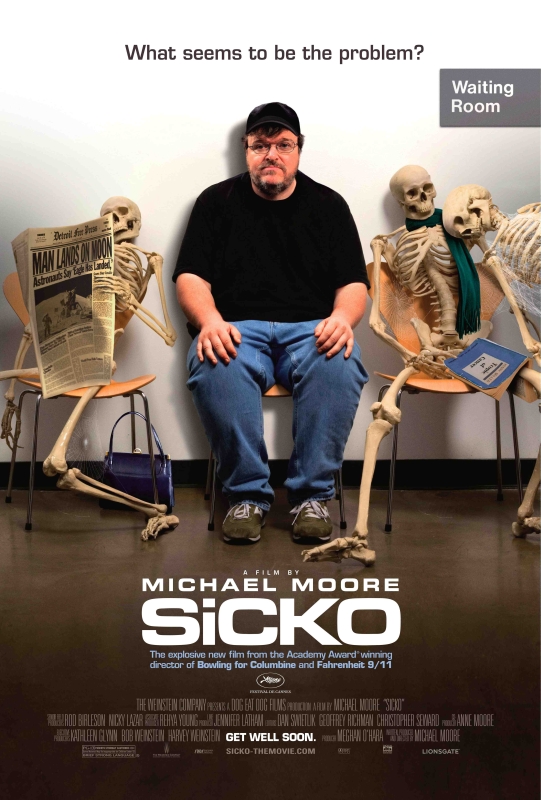
[Movie] Sicko


Sicko was the first Michael Moore documentary I saw, and I loved it. It totally opened my eyes to the issue of universal health care. Why is it that in the world's richest country, so many of us are without healthcare and thereby subsequently so afraid to seek medical help, which in turn delays treatment and racks up monumental debt? Why is it that so many of us are workaholics and fail to take care of ourselves? Why is it that the society shuns the idea of healthcare for all just because it has the slightest connotation of, god forbid, socialism? Why is it that people are willing to sacrifice the health of other people and in turn the society as a whole in the name of money? I swear there is a conspiracy going on...

What really spoke to me was the healthcare system in the European countries. I guess it's not just the healthcare system themselves, but the way their government is set up. They really try to take care of their people: minimum of 5 weeks paid vacation, extra (paid) vacation for honeymoon and sickness, government help for new mothers, less waiting time at the ER... Man, it almost wants to make me move to Europe! (The healthcare in Taiwan is similar with the cheap drugs and procedures, short waiting time at the ER. However, this makes the people abuse the system by going to the doctor and/or the hospital at the slightest discomfort and hoard drugs. So yes, there is a downside to everything.)

The other part that really stood out to me was the scene where Kaiser of Bellflower decided to drop off a patient still in her hospital gown, because she could not pay for her hospital bill. This was picked up by the street security camera on skid row. What kind of human being decides that this was all of a sudden acceptable?! I don't and can't comprehend the meaning of it all. I shared my frustration with a coworker and apparently, it is not all that uncommon (although I would hope improved since this documentary).

I work in healthcare. I see the case managers and the discharge planners working their butt off to get certain people discharged because of their insurance (or lack thereof). I get it - hospitals are a business. Healthcare is a business. And the point of any sort of business is to make money. I get it - but I don't agree with it. I wish there was some way that I could help with the situation, but what am I, a singular individual, supposed to do?

Watch this movie. It will certainly open your eyes.

Friday, June 4, 2010

letterpress with Gwyneth Paige


How can you not fall in love with letterpress? I love the sleek design of Gwyneth Paige, her fonts choices, and vow to have something letterpressed some time in my life...

Sunday, May 30, 2010

Love of the Day - Buffalo Wings


I don't eat things like this a lot, but I really looooove the buffalo wings from Hooters. And Clearman's Galley. I tried making it once. Everyone ate them but you can tell they didn't like them so much... Maybe it's because I tried to bake them instead of frying them...

Makes: About 15 wings

You will need:

  • 1.5 to 2 lb chicken wings, tips trimmed and cut at the joint (Note: Sometimes you can find “party wings” at your local store, or the frozen drumettes, you can use them if you prefer)
  • 1 cup all purpose flour
  • 1 teaspoon seasoning salt
  • 1 teaspoon pepper
  • 1 teaspoon granulated garlic
  • 1 egg
  • 2 tablespoons milk
  • About 1/4 cup canola oil
  • wing sauce (recipe follows)
  1. Preheat your oven to 425 degrees.
  2. Combine flour, seasoning salt, pepper and granulated garlic in one gallon plastic bag.
  3. In a bowl whisk together egg and milk. Transfer to another one gallon plastic bag.
  4. Put chicken wings in the egg wash first. Seal the bag and shake to coat.
  5. Transfer the wings to the plastic bag with flour. Seal the bag and shake to coat.
  6. Line a cookie sheet with aluminim foil. Lay wings in single layer. Drizzle with canola oil. Bake for 20 minutes. Turn and bake for an additional 20 minutes. Wings will be golden brown and crispy. While your wings are cooking prepare your sauce.

For the wing sauce:

  • 1 habanero pepper, diced fine (Note: you may want to use plastic gloves while dicing this pepper, and DO NOT touch your eyes before washing your hands)
  • 2 tablespoons canola oil
  • 5 tablespoons sambal oelek ground fresh chili paste (you can find this in the Asian food section of your local grocery store)
  • 1 tablespoon granulated garlic
  • 1/4 teaspoon cajun seasoning
  • 1/4 teaspoon seasoning salt
  • 1 teaspoon freshly ground pepper
  • 1/4 cup vinegar
  • 1/4 cup water
  • 2 tablespoons butter
  1. In a saucepan over medium heat, heat canola oil. Add habanero pepper, quickly cook, about 1 minute, pepper will be slightly softenend.
  2. Add chili paste, garlic, cajun seasoning, seasoning salt and pepper. Stir to cominbe. Add vinegar and water.
  3. Cook over medium heat until sauce thickens slightly, about 15 minutes.
  4. Add butter and cook until butter melts.
  5. After the wings have finished cooking in the oven. Transfer them to a big bowl. Pour wing sauce over them and toss to coat. Serve with celery and blue cheese or ranch dressing.


(Source)

Monday, February 15, 2010

Jamie Oliver (TED Talk)

This TED talk is probably super boring to everyone else but I find it extremely inspiring. This guy could easily be my next idol.

He talks about reforming school lunches. Teaching kids about food. Real food, not just fast food. My thesis was about school food environment, so I hold this topic close to heart.

The part where he goes around asking kids what kind of vegetable he is holding up, and every kid answers wrong, it just breaks my heart and makes me want to cry. (around 12:00 min)

Keep watching, and the part where he makes a visual about how much sugar there is in (flavored) milk nowadays is just... astounding.

Monday, February 8, 2010

So you can avoid working on Mondays (Links)

The Beverage Industry

True Serving Sizes : pictures & article

And apparently, Michelle Obama plans to announce tomorrow new plans/programs to battle childhood obesity. Stay tuned!

Friday, February 5, 2010

Epigenetics: Changing Your Genes (...sort of...)


(Picture of DNA, courtesy of Molecular Station)


Everybody knows that we should eat healthily, stop smoking, and exercise regularly. But how much good can those habits really do? It turns out that the answer may lie in the theory of epigenetics.

Wikipedia defines epigenetics to be "the changes in phenotype (appearance) or gene expression caused by mechanisms caused by mechanisms other than changes in the underlying DNA." Simply put, it's the idea that external factors, other than your individual DNA, can cause changes to what genes get turned on and off. "Our genes, not the whole story" in US News & World Report (February, 2010) explores this new area of research.

The article mentions a pilot study led by Dean Ornish that found that 30 men with prostate cancer were able to change lower their prostate-specific antigen scores and the activity of their tumors with intensive lifestyle changes, such as exercising 30 minutes daily, doing yoga or meditating for an hour daily, boosting their social support networks, and eating a low-fat diet based primarily on fruits, vegetables, beans, and soy protein.

Furthermore, the article cites stress as one of the factors that can change gene expression, for the worse. According to Moshe Szyf, an epigenetics researcher and profession at McGill University in Montreal, stress hormones "are pervasive...traveling to every organ and tissue" which can ultimately change actual genes that help us deal with stress.

This article excites me. It validates my belief that we have more control over who we are than we think. As Ornish states, "our genes are a predisposition, but our genes are not our fate." Family history may be strong for cardiovascular disease, or diabetes, or Parkinson's, or disease XYZ, but we do have the power to change or at least postpone its onset by developing good living habits and learning how to deal with stress (short and long term ones). Eating adequate fruits and vegetables and skipping sodas does matter; not smoking does matter; exercising regularly does matter - all in ways we may not be able to see. But our bodies can most certainly feel it. And in the long run, that is what matters the most.

For some education videos on epigenetics, check out University of Utah's site.


Source: Baldauf, Sarah. "Our genes, not the whole story." US News & World Report Feb. 2010: 24-26.


Ornish D, et al. Changes in prostate gene expression in men undergoing an intensive nutrition and lifestyle intervention. Proc Natl Acad Sci USA. 2008;105:8369-74.

Thursday, February 4, 2010

Compromise

A recent fight with the boyfriend involves both of us assuming that we know what the other person wanted when in fact it wasn't. I thought that he had wanted to go watch a music show (something he mentioned to me months ago), whereas he thought I had wanted to go on a trip to Utah (something I had mentioned to him months ago). As it turns out, we are not the other person, and we would never know what priorities and thought processes the other person has in mind. (Ironically, this fight was over what to do for Valentine's day.)

That got me thinking. Many times in working with clients, we may naturally assume that we know what is best for them. For me, I get super excited, and I just want to unload ontol them my knowledge as well as what to eat and what not to eat. However, I often lose sight of what is important to them. Perhaps soda is one of those things that a particular client is unwilling to give up, but he/she is able to stop having desserts after each meal. Or perhaps having that one piece of dark chocolate at the end of the day is what motivates another client to get to the gym and work at that treadmill.

Whatever it is they need to keep working towards their goal, it is up to us dietitians to find out. They should not be feeling deprived. Instead, dieting, as well as many other facets of life, should be more of a compromise - having less of the things you don't care about as much so that you can have more of the things you love.

Wednesday, February 3, 2010

Vitamin D (the article that I tried to write, but failed)

Vitamin D has come to light recently as one of those miracle vitamins. It has been associated with heart health, diabetes, and cancer. However, there may be a dangerous side to vitamin D that few people are aware of.

A little bit before the holidays, I ran across a social worker whom I had not seen in the hospital for a while. Nancy* and I started working at about the same time; we had sat next to each other at orientation, and we both started on the same floor. Even though she was many years older than me, we hit it off pretty well.


Anyways, there was something curious about Nancy that day. Her face looked blotchy as if she had been sitting in the sun for too long, and her fingers had cuts and band-aids all over. Yes, Southern California sun can be brutal even in November, but it just seemed too much! Little did I know, Nancy had more to share than just a story about being sunburnt.

Nancy said that she was declared vitamin D deficient by her internal medicine doctor and was prescribed 50,000 IU vitamin D once a week for 6 weeks. Two weeks into it, she started noticing that her skin was itchy. Thinking that it was her new laundry detergent, she re-washed all her clothes and bed linen with the old laundry detergent, but to no avail. By the time she went back to the doctor, she had already taken her third dose. The doctor had her electronic file and had asked her if she had taken any new medication, but both had neglected to consider vitamin supplements. By this time, her skin was itching so much that wearing clothes literally hurted her. Yet, she had to cover herself up to go outside because the sun rays hurt her skin. She was taking Benedryl around the clock and sleeping. "Life was miserable." By the time she took the fourth dose, Nancy's husband finally found online the side effects of vitamin D toxicity, all of which matched up to Nancy's. Astonished, Nancy called her doctor to inform him of this effect, to which he answered that he knew nothing about it and that he has been prescribing vitamin D to other patients with no complaints and reactions. Even more astonishing was when Nancy finally got a chance to look at her vitamin D lab report, her value was actually within the normal range, merely on the low side, meaning that she was not actually vitamin D deficient as the doctor claims!

To which I ask, then why the huge dose, doc?

It seemed scary that a doctor who has been presribing a vitamin supplement knows nothing of its potentially toxic effect. It also did not help that research about vitamin D toxicity is limited, such as the toxic dosage. Perhaps my friend Nancy was unlucky in that she had a sensitivity to the vitamin D, but perhaps other people also experience this without ever finding out the reason for their sickness. Symptoms of hypervitaminosis D include fatigue, nausea, vomiting, weakness, loss of appetite, and itchy skin. Vitamin D should also be avoided in those with kidney disease, hypercalcemia in the blood, atherosclerosis, and hyperparathyroidism. When taking a multivitamin, make sure the fat-souble vitamins A, D, E, and K are not meeting greater than 100% of the recommended needs. If taken in large amounts for an extended period of time, they can stay in your fat tissues and cause more damage than good.

Currently, the adequate intake recommendation for vitamin D is 200 IU (birth - 50 years of age), 400 IU (ages 51-70), and 600 IU (ages 70+), which can be met through an adequately balanced diet, 30 minutes in the sun daily, and an over-the-counter supplement as needed. Avoid long-term supplementation of more than 2,000 IU daily as that is the upper limit established by the Food and Nutrition Board (FNB). Prescription-strength supplementation include vitamin D2 (ergocalciferol), which provides 50,000 IU per capsule, and vitamin D2 liquid (drisdol) at 8,000 IU/ml, and should be reserved for those seriously deficient of vitamin D.

Lastly, don't forget: vitamins and mineral supplements are still considered medications. When taking a multivitamin, make sure the fat-souble vitamins A, D, E, and K are not meeting greater than 100% of the recommended needs. If taken in large amounts for an extended period of time, they can stay in your fat tissues and cause more damage than good.


References:
1. Hancock JN, Shao A, Vieth R, Heaney R. Risk assessment for vitamin D. Am J Clin Nutr. 2007;85:6-18.
2. Kulie T, Groff A, Redmer J, Hounshell J, Schrager S. Vitamin D: An Evidence-Based Review. JABFM. Nov 2009; 22: 698-706

* Name has been changed to remain anonymity.

Edit: There is a recent New York Times article on vitamin D.

Tuesday, February 2, 2010

The new Coke Mini - Where's the MINI-ness?


I recently came across the news of the release of the new Coke Mini (December 2009).

First off, I looooove the slogan - "pay more, get less." That just makes me want it so much more!

All kidding aside, it's good that food companies are recognizing the need for smaller portioned beverages. BUT, it's still Coke. Do we really need food companies to prepackage foods and beverages for us and say, "Here you go, this will be better for you because it is smaller" despite the fact that it is still soda? Do we really need these prepackaged, calorie-controlled "inventions" because we can't do it ourselves?

As a consumer, this is how I would see it: a Coke mini is 7.5 oz and costs $3.99 (per CSPI - the Center for Science in the Public Interest) for 8 cans, whereas a liter bottle goes for $2, at most (maybe even $1 if on sale or with a coupon). Hmm... would I really opt to pay double and get 60 oz worth of soda (= 1.77 liters) when I can get 1 liter for half that price, even though the former is perfectly calorie controlled for me? Would I now?

You can calorie-pack foods all you want, but if self-restraint is still not exercised and more than one bottle or one package is consumed, then all point is lost. Call me sadistic and nontrusting, but this seems like a ploy to get people to drink more Coke. If you ask me.