Wednesday, October 20, 2010

The Pear-Wannabe


At work, there is always the same kinds of fruits: bananas, oranges, apples. Occasionally, there will be more exotic selection (usually during the summer): watermelon, peaches, grapes. Sometimes they will be mixed. Yesterday, I walked by the fruit section of the cafeteria and spotted a bright yellow in the clear, to-go box.

Ohhh, mangos!

Under the mangos lie a layer of cucumbers and pears. All of which are my favorites. Except when I brought the fruit box back to my table and took a bite out of my pear, it turned out to be tasteless.

Jicama, my coworker informed me.

I spit it out. It was tasteless, not like the sweet, juicy pear I was expecting. Apparently you are supposed to eat it with lemon juice, except I was too lazy to head back into the cafeteria to find a wedge of lemon.

I tried the jicama + lemon juice combination today, and it is a lot better. That led me to wonder: what in the world is jicama?

Jicama is known as “Mexican turnip.” It is a root, is usually eaten raw, sometimes with salt, lemon, or lime juice and chili powder, and is most often found in salads. It can also be cooked with chili powder, cilantro, ginger, lemon, lime, oranges, red onion, sesame oil, and salsa. Apparently, only the root can be eaten; the rest of the jicama is poisonous. Nutritionally, jicamas are high in carbohydrates, fiber, water content, and vitamin C, and are low in calories.

Here is a super easy and fast jicama recipe (from allrecipes):

Ingredients:
1 large jicama
2 lime, juiced
1 tablespoon crushed red pepper

Directions:
Peel jicama and cut into French fry-sized sticks. Combine with lime juice and cayenne pepper in a medium bowl and toss to coat. Serve as finger food.

Source

Tuesday, October 19, 2010

[Vitamin] Vitamin C


In the 1700s, sailors who sucked on lime on their sea trip were noted to not develop scurvy during their months without fresh vegetables and fruits. Thus came the discovery of vitamin C.

What does it do for me?
Helps make collagen and keep skin nice and supple
Helps with many bodily functions at the cellular level
Acts as an antioxidant, which may help reduce inflammation in the body

How much is enough?
90 mg/day (males); 75 mg/day (females)
To help you put it in context, a medium orange has about 70 mg of vitamin C.

What happens if I have too much?
There are no serious effects to taking megadoses of vitamin C (> 2000 mg/day) because it is water-soluble; the excess gets flushed out with your waste. The only exception would be if you have any kind of kidney disease, since now the damaged kidneys may not be able to process the vitamin C as well, increasing chances for kidney stones. There are, however, side effects to large doses of vitamin C, including diarrhea, nausea, vomiting, headache, and fatigue.

What happens if I don’t have enough?
Bleeding gums/other mucous membranes

I want some. Where?
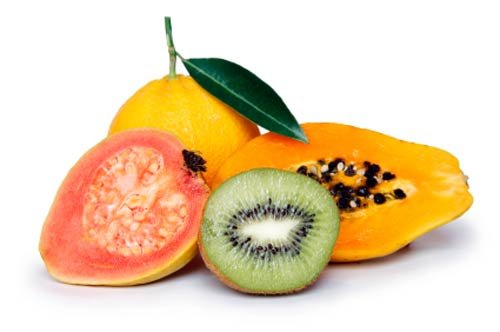
Fruits: kiwi, persimmon, strawberry, papaya, citrus, melon, cranberry, tomato, blueberry
Vegetables: broccoli, Brussels sprouts, kale, cauliflower, spinach

Other Tidbits:
1. Smokers with vitamin C deficiency are at higher risk for lung diseases than smokers with adequate vitamin C.
2. Despite common belief, vitamin C has really not been scientifically shown to effectively reduce chances of catching the cold or shortening duration. Sorry, but that orange juice or Airborne you so faithfully buy may not be as useful as they claim to be!

Tuesday, October 12, 2010

[Movie] When in Rome


From IMDb: Beth is a young, ambitious New Yorker who is completely unlucky in love. However, on a whirlwind trip to Rome, she impulsively steals some coins from a reputed fountain of love, and is then aggressively pursued by a band of suitors.

I really like Kristen Bell and Josh Duhamel, but for some reason this couple just didn't work for me. Add in magical coins, spells and curses, and a fountain of love (with Jon Heder and Danny DeVito), and I actually just wanted this movie to end. I was able to endure it though for glimpses of Rome, NYC, and Kristen Bell's chic outfits.

Monday, October 11, 2010

[Movie] Repo Men


From IMDb: Set in the near future when artificial organs can be bought on credit, it revolves around a man who struggles to make the payments on a heart he has purchased. He must therefore go on the run before said ticker is repossessed.

What you might like about this movie: Jude Law. blood. action. more blood. very trippy ending. even more blood.

What you might not like about this movie: that you can't figure out if Forest Whitaker is a good guy or not. the amount of blood.

H thought this movie was alluding to credit card debt. I thought it was alluding to the increasing number of people with failing organs and the start of artificial organs (they are already developing and testing artificial pancreas as we speak). So I guess you can take different messages away from this movie. Or not and just enjoy the blood. And Jude Law.

Sunday, October 10, 2010

[Reading] Eating Animals


I got into this book pretentiously knowing what to expect: that it was the story of a father-to-be questioning dietary choices available to his son. He would visit and vividly describe factory farms - I get it. But what I really got was a ton more.

Jonathan Safran Foer starts the book by questioning why we don't eat dogs. Not that he would eat a dog or supports the practice of eating men's best friends, but he questions the practice of eating fish, poultry, cattles, pigs, turkeys, and, wait a minute, why not dogs? They are not any more inferior or superior in terms of quality of meat or "animal-ness". I actually agree with his view. We don't eat dogs (or even think about eating them) because we use them as pets. What if, for instance, in a parallel universe men raise pigs as pets? Would the dogs and cats of that world become food?

The book disturbs me in not only the pictures it paints of animal life in factory farms or "farming" methods, most of which you and I probably know in the back of our heads but successfully ignores. For example: the overcrowding, the exorbitant amount of feces, and the castration/insemination (the last of which was new knowledge to me). It also describes the irony of the term "factory farming," precisely because what the factories are doing are the opposite of what we know to be traditional farming. Even the most dangerous and violent criminals have human rights to dignity and decency; what of these animals that have done nothing to perturb the human population to exist in peace? Don't they deserve any shred of decency in quality of life?

To say that one must not could not eat animals is not what Foer concludes. Eating (what to eat, when to eat, and how much to eat) is personal choice, but that doesn't mean one should eat blindly. To not know where or how your food comes from and the travels it had to go through, that is simply ignorance. To be better informed and make educated decisions, that is perhaps what Foer suggests.

I'm not sure I can give up meat altogether. Throughout my college and graduate-school days, I did experiment with vegetarianism. (As a dietitian, I believe that I should attempt different diets to know what my clients and patients go through.) It seemed that my body craves animal protein from time to time. I could eat less of it, even none of it for a few days. Then the desire comes with an urgency. It's unexplainable, and I don't intend to understand it, even after reading this book. But I would like to be better learned about food sources and invest in products that have come from a better way of farming, travel, and slaughter (as best as possible anyway - is there really such a thing as humane slaughter?). I hope all is not too late and that I can improve the way my family eats as well.

Tuesday, October 5, 2010

[Movie] The Book of Eli


From IMDb: In a violent post-apocalyptic society, the drifter Eli has been wandering to west across North America for the last thirty years reading a unique book that he brings with him. He survives hunting small animals and seeking goods in destroyed houses and vehicles to trade in villages for water and supplies. When he reaches the village ruled by the powerful mobster Carnegie, the man offers a job to Eli to join his gang. Carnegie presses his blind lover Claudia to send her daughter Solara to convince Eli spending the night with him. The girl sees the book of Eli, and when Carnegie beats up on Claudia, she reveals that Eli has the sought book. Carnegie sends his gang to take the book from Eli, but the man is up for protecting the book with his life.

This movie reminded me a lot of I Am Legend, especially in the moment. Watch until the end though, for a "Sixth Sense" moment!

Monday, October 4, 2010

[Movie] The Reader


From IMDb: Post-WWII Germany: Nearly a decade after his affair with an older woman came to a mysterious end, law student Michael Berg re-encounters his former lover as she defends herself in a war-crime trial.

This is from a book. A book that I read 3-4 years ago. A book that I recalled the ending to only halfway through the movie. And let me say, the second half of the movie is much more dramatic and emotional than the first. I won't reveal anything, but Kate Winslet's acting most certainly moved me to tears. Quite frankly, I never thought much of her until now. I recommend both the book and the movie, but the movie is actually good enough that you don't need the book to understand what is going on (a rarity these days).

Friday, October 1, 2010

Melancholy Love


I am certainly in love with everything in this shop.

Monday, August 16, 2010

Last month of Summer


Summer is really the best time to get fit. No matter where you live, the weather is most likely to be comfortable most of the time to be outside. Not to mention, it stays light out longer! As we approach the end of summer, there is definitely still enough time to make the most of it.

* Go outdoors! Whether it be taking a short walk after dinners on weekdays, or going to outdoor concerts on the weekends, being outdoors more can make you instantly feel healthier and help you unconsciously move around more. Try bike riding, walking on the beach, anything you like!

* Eat more fruits! That's right, I am telling you to eat more. Summer is really the best time to get a good variety of fruits reasonably priced: cherries, strawberries, kiwis, peaches, melons. If you are not a fruit eater to begin with, don't let these colorful things intimidate you! Stick to the fruits you know you will like but don't be afraid to try new ones once in a while. Make it a challenge among your family and friends to eat at least two servings of fruit a day. Try fruits with breakfast and as a snack. Be wary of juices and smoothies though as they tend to be high in calories and laden with sugar.

* Eat when you are hungry! As temperature heats up, our appetites actually go down. We can capitalize on this natural phenomenon by reminding ourselves to eat when we are hungry, not when the clock says "meal time." Ask yourself if you are truly hungry, or if you are eating because you are bored, because it is noon-time, etc.

Thursday, July 1, 2010

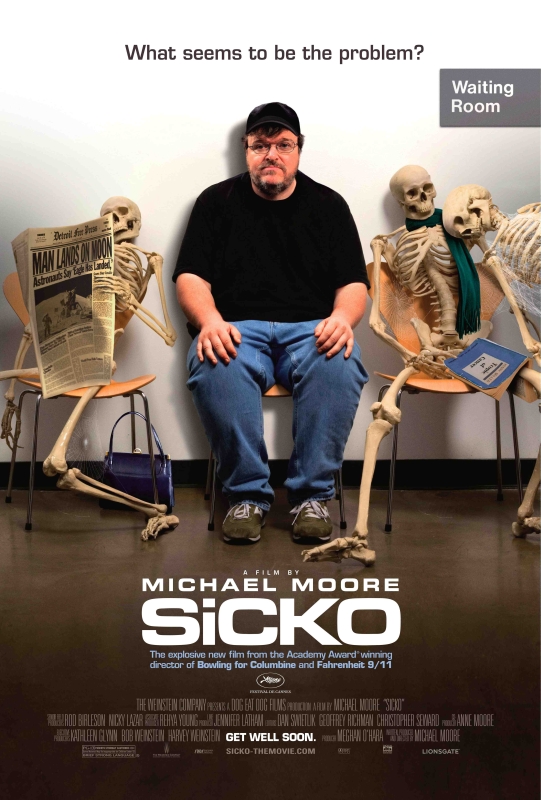
[Movie] Sicko


Sicko was the first Michael Moore documentary I saw, and I loved it. It totally opened my eyes to the issue of universal health care. Why is it that in the world's richest country, so many of us are without healthcare and thereby subsequently so afraid to seek medical help, which in turn delays treatment and racks up monumental debt? Why is it that so many of us are workaholics and fail to take care of ourselves? Why is it that the society shuns the idea of healthcare for all just because it has the slightest connotation of, god forbid, socialism? Why is it that people are willing to sacrifice the health of other people and in turn the society as a whole in the name of money? I swear there is a conspiracy going on...

What really spoke to me was the healthcare system in the European countries. I guess it's not just the healthcare system themselves, but the way their government is set up. They really try to take care of their people: minimum of 5 weeks paid vacation, extra (paid) vacation for honeymoon and sickness, government help for new mothers, less waiting time at the ER... Man, it almost wants to make me move to Europe! (The healthcare in Taiwan is similar with the cheap drugs and procedures, short waiting time at the ER. However, this makes the people abuse the system by going to the doctor and/or the hospital at the slightest discomfort and hoard drugs. So yes, there is a downside to everything.)

The other part that really stood out to me was the scene where Kaiser of Bellflower decided to drop off a patient still in her hospital gown, because she could not pay for her hospital bill. This was picked up by the street security camera on skid row. What kind of human being decides that this was all of a sudden acceptable?! I don't and can't comprehend the meaning of it all. I shared my frustration with a coworker and apparently, it is not all that uncommon (although I would hope improved since this documentary).

I work in healthcare. I see the case managers and the discharge planners working their butt off to get certain people discharged because of their insurance (or lack thereof). I get it - hospitals are a business. Healthcare is a business. And the point of any sort of business is to make money. I get it - but I don't agree with it. I wish there was some way that I could help with the situation, but what am I, a singular individual, supposed to do?

Watch this movie. It will certainly open your eyes.